

CashGPS

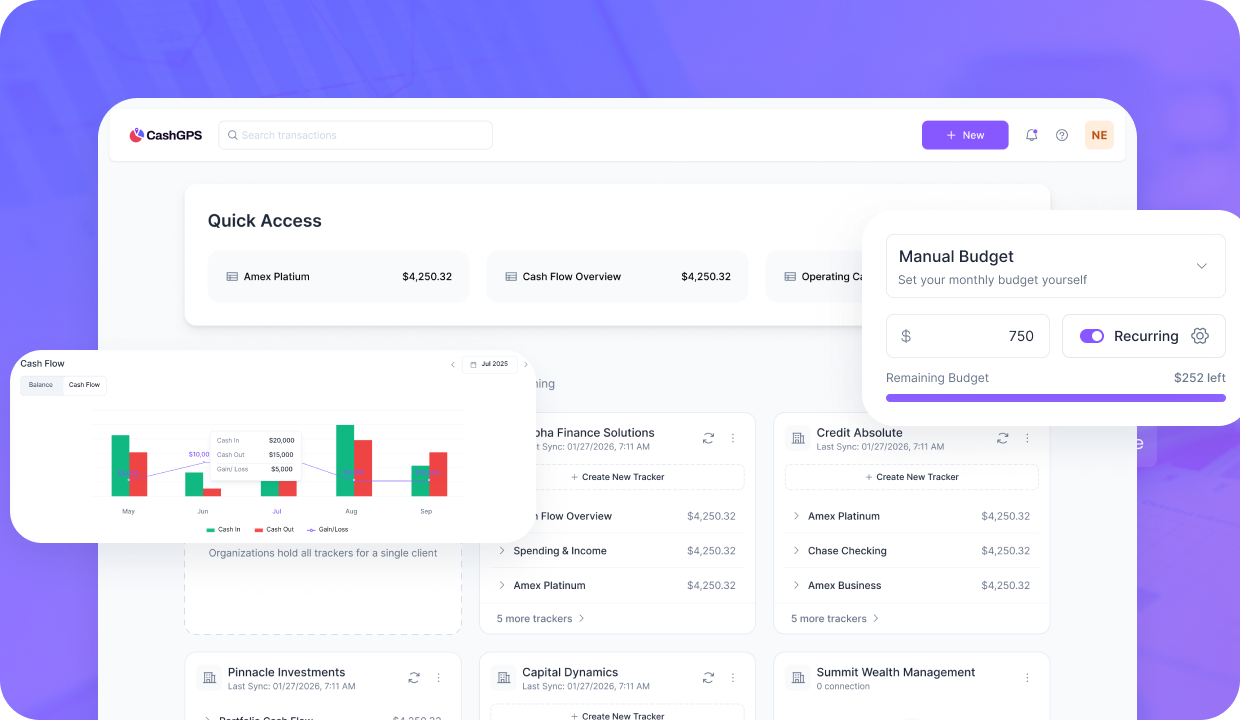
CashGPS is a finance platform for individuals and small businesses to manage budgets, cash flow, and spending—built from ideation to final implementation.

Overview

Cash flow is the lifeblood of every business—but most companies still rely on fragmented tools, spreadsheets, and delayed insights to manage it.

CashGPS set out to change that.

They partnered with us to define and build a unified platform that transforms how businesses understand, predict, and act on their financial data—turning complexity into clarity, and data into decisions.

What we did
Product vision & strategy
Financial data platform (MVP → scale)
Web app design & development
Data visualization & forecasting UX
Design system
Fields

Finance

Services

Web & App

Outcome

4x
faster access to financial insights
−65%
Replacing spreadsheets with automated data pipelines
+120%
increase in user engagement
"The feature analysis report enabled us to measure the adoption of a feature in a couple of clicks. By connecting this report to Slack we’ve improved our workflow and team efficiency. This way we spend less time on our data tools."
- Onmo -

The Challenge

CashGPS needed more than just a budgeting tool. They required a comprehensive platform combining intuitive UX, strong security, and intelligent features—designed for both tech-savvy users and beginners.

Fragmented data
Scattered across tools
No real-time view
Always a step behind
Complex integrations
Hard to connect & scale
Limited insights
No clear next move

Our Approach

The Platform

Simplifying complex financial data into clear, intuitive interactions
Differentiated Instruction
Experiential Learning
Project-Based Learning
Differentiated Instruction
Differentiated Instruction tailors teaching methods to accommodate individual learning needs. By assessing students' strengths and weaknesses, educators can provide personalized support and resources. This approach ensures that all students have the opportunity to succeed, regardless of their starting point, fostering a more inclusive learning environment.
Experiential Learning
Experiential Learning emphasizes learning through experience. This approach allows students to engage in activities that promote reflection and application of knowledge. By participating in simulations, field trips, and hands-on projects, learners gain valuable insights and skills that are applicable in real-life scenarios.
Project-Based Learning
Project-Based Learning (PBL) immerses students in real-world projects that require critical thinking and creativity. This hands-on approach allows learners to apply their knowledge in practical situations, promoting deeper understanding and retention of information. PBL encourages students to take ownership of their learning and develop essential life skills.
Differentiated Instruction tailors teaching methods to accommodate individual learning needs. By assessing students' strengths and weaknesses, educators can provide personalized support and resources. This approach ensures that all students have the opportunity to succeed, regardless of their starting point, fostering a more inclusive learning environment.
Experiential Learning emphasizes learning through experience. This approach allows students to engage in activities that promote reflection and application of knowledge. By participating in simulations, field trips, and hands-on projects, learners gain valuable insights and skills that are applicable in real-life scenarios.
Project-Based Learning (PBL) immerses students in real-world projects that require critical thinking and creativity. This hands-on approach allows learners to apply their knowledge in practical situations, promoting deeper understanding and retention of information. PBL encourages students to take ownership of their learning and develop essential life skills.

The Platform

Simplifying complex financial data into clear, intuitive interactions
Visual Design Fundamentals
Interaction Design Principles
Usability Testing Methods
Visual Design Fundamentals
Visual Design Fundamentals encompass the essential elements of design, including color theory, typography, and layout. These principles help create aesthetically pleasing and functional designs that enhance user experience. By understanding how visual elements interact, designers can craft interfaces that not only look good but also improve usability and accessibility.
Interaction Design Principles
Interaction Design Principles focus on creating engaging interfaces that facilitate user interaction. This includes understanding how users navigate through a product, the feedback they receive, and the overall flow of tasks. By applying principles such as consistency, feedback, and affordance, designers can create intuitive experiences that guide users effectively through their journeys.
Usability Testing Methods
Usability Testing Methods are critical for evaluating how real users interact with a product. This process involves observing users as they complete tasks, gathering feedback, and identifying pain points. By employing various testing methods, such as A/B testing and remote usability testing, organizations can make informed decisions to improve their products and ensure they meet user needs effectively.
Visual Design Fundamentals encompass the essential elements of design, including color theory, typography, and layout. These principles help create aesthetically pleasing and functional designs that enhance user experience. By understanding how visual elements interact, designers can craft interfaces that not only look good but also improve usability and accessibility.
Interaction Design Principles focus on creating engaging interfaces that facilitate user interaction. This includes understanding how users navigate through a product, the feedback they receive, and the overall flow of tasks. By applying principles such as consistency, feedback, and affordance, designers can create intuitive experiences that guide users effectively through their journeys.
Usability Testing Methods are critical for evaluating how real users interact with a product. This process involves observing users as they complete tasks, gathering feedback, and identifying pain points. By employing various testing methods, such as A/B testing and remote usability testing, organizations can make informed decisions to improve their products and ensure they meet user needs effectively.

Other projects

No items found.